Pipeline Safety - United States

Pipeline Safety - United States

Information you need to know about Pipelines

24 Hour Emergency Response Numbers

Pembina U.S.: 1-800-360-4706

Aux Sable (North Dakota): 701-628-9393

Aux Sable (Illinois): 815-941-5858

Alliance (US & Canada): 1-800-884-8811


Pipelines are a safe and efficient means of transporting large quantities of crude oil, natural gas and natural gas liquids.

Our pipelines and facilities are designed, constructed, and operated in a safe and environmentally responsible manner.

We know that maintaining the integrity of our pipelines is essential to the health and safety of the communities in which we operate. A commitment to safety is a shared responsibility between us and all our stakeholders, including the digging community.

We conduct regular inspections, maintenance, and testing to confirm that our pipelines are operating safely. We monitor the operating conditions of the pipeline through sensors 24/7/365 from our state-of-the-art control room. We conduct aerial and ground inspections to ensure our systems are operating safely and to identify unsafe or unauthorized activity which could damage the pipe or impact safe operations.

We reinforce our commitment to excellence in safety in our daily operations by developing stringent standards and reviewing potential hazards, in addition to conducting regular safety meetings, contractor screenings, and inspections.  


A pipeline right-of-way is the strip of land where the pipeline is located. The width of the right-of-way may vary depending on factors such as pipeline diameter or the number of pipelines in an area. The area extending 30 meters (100 feet) on either side of the pipeline is called the Prescribed Area / Controlled Area. Right-of-way corridors are sometimes recognizable because they are clear of trees, buildings and other structures. The corridor enables Pembina U.S. employees and contractors to access the pipeline for operations, inspections, maintenance, testing, and in the rare event of an emergency. Regulations restrict certain activities near the right-of way that could pose a threat to public safety and the safe operation of the pipeline. 

Pipeline markers are located along the pipeline right-of-way. Note that more than one pipeline can share a right-of-way. Markers identify the area, but not the exact location or depth of the pipeline. They also specify the product transported, the operator’s name and emergency contact number. Only a Pembina representative can identify the exact location of the pipeline. 
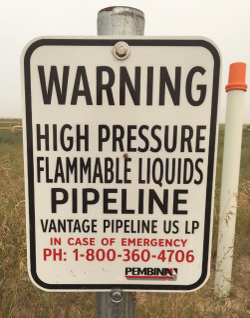

If you notice any unusual or suspicious activity on or near the pipeline ROW, please report it by calling 9-1-1 and Pembina’s 24-hour emergency number 1-800-360-4706.
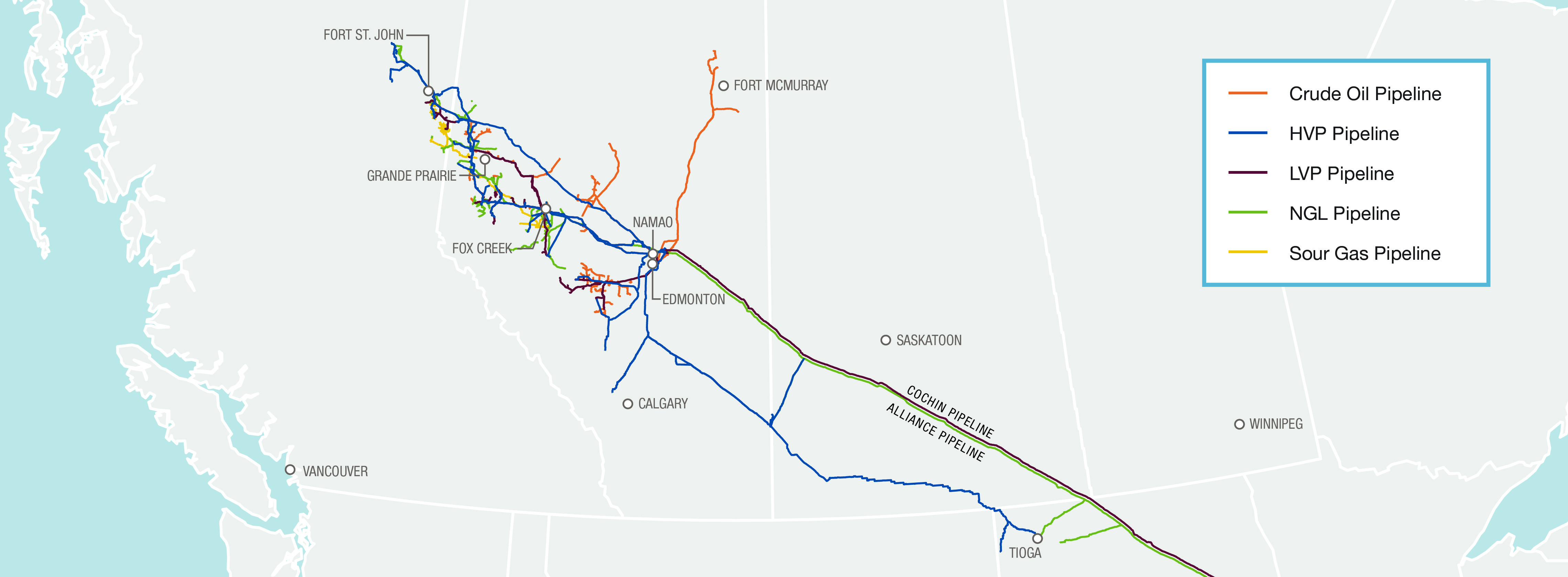
Products Transported in Your Area


Planning work around Pembina U.S. pipelines

Some of the biggest threats to pipeline safety come from unauthorized construction, development, encroachment and digging activities. Notifying Pembina U.S. and your local One-Call Centre are your first steps to preventing damage to underground infrastructure and working safely around pipelines.

Written consent from Pembina U.S. must be received before any of the following activities can occur:

  • Construction of a facility across, on, along, or under a pipeline (including the ROW)
  • Ground disturbance activities (excavation or digging) within the Prescribed Area / Controlled Area or 30 meters (100 feet) on either side of the centerline of the pipeline
  • Operation of a vehicle or mobile equipment across a ROW, outside the travelled portion of a highway or public road
  • Using explosives within 300 meters (1,000 feet) of Pembina U.S. pipeline ROW
  • Any activity that the company deems may negatively impact the safety of the pipeline

Always have a copy of your agreement onsite. It informs us of your activity and allows us to provide guidance to prevent incidents or damage to our pipelines.


  1. Email [email protected] with your name, legal land description, and a description of the work you would like to do.
  2. Pembina U.S. will contact you and walk you through how to submit a request for permission to proceed with your activity in, along or adjacent to the ROW.
  3. Pembina U.S. will review your request once your information has been received. Pembina may:
    • Grant consent with standard conditions; or
    • Grant consent that requires specific conditions be met to ensure safety; or
    • Work with you to find solutions and resolve issues regarding the consent request; or
    • deny consent in the rare situation that a feasible safety solution cannot be found.
  4. Once consent has been granted, you must:
    • Make a locate request to your local One-Call Centre at least three business days before beginning the work. Pembina U.S. will arrange for a Company representative to be on site to inspect the area at time of crossing.
    • Always keep the written consent and documentation onsite.
    • Follow all terms and conditions laid out in the consent, and all instructions from Pembina U.S. personnel onsite.

If you have additional questions, please contact us toll free at 1-888-428-3222 and we will work with you to address your needs.

Ground Disturbance is any work, operation or activity that results in the disturbance of the earth. These activities include but are not limited to:

Tree planting

Auguring

Building a fence or pounding in posts

Topsoil stripping, levelling, grading

Excavating, trenching, digging

Quarrying, seismic exploration, blasting

Plowing or tilling

Installing drain tiles

Tunnelling, boring, drilling

Ditching

Depth of cover (DOC) is the vertical distance between the top of the pipeline and the surface of the ground. It is crucial for protecting both the pipeline and the interests of landowners. Adequate depth ensures the pipeline is shielded from surface activities like agricultural activity, construction, or heavy equipment traffic, reducing the risk of accidental damage and potential safety hazards.

Any ground disturbance or non-agricultural activity will affect the DOC over the pipeline and must have a One-Call or Crossing Agreement in place before you can proceed with your activity.

If you are aware of areas where DOC has changed due to erosion, construction activities, or farming practices, please contact us at [email protected] or 1-800-920-1979.

Farmers and ranchers play an important role in protecting pipelines from damage and must contact the local One-Call center before conducting any soil disturbing activities that are not considered an agricultural activity. 

What is agricultural activity? 

Agricultural activities include the production of crops and raising of animals, such as tillage, plowing, disking, harrowing and pasturing.

Assessed agricultural activities require notification via One-Call and written consent from Pembina. Agricultural activities are permitted on or near a pipeline ROW if: 

• The vehicle or equipment complies with the manufacturer’s approved weight and tire pressure limits. 

• Pembina has not issued a notice restricting crossing at that location. Cultivation depth is 45 cm (18 in) or less

Written consent from Pembina and a One-Call Notification are required for all non-agricultural activities and agricultural activities (that fail to meet one or more of the above guidelines) within or across the ROW and within Prescribed / Controlled Areas. All non-agricultural activities require a One-Call placement. Note that heavy rains, floods, and droughts can affect the soil above buried pipelines.

 If you spot soil erosion or displaced soil along a ROW, please contact Pembina immediately. 

Unless defined as an agricultural activity, crossing the pipeline with a vehicle or mobile equipment (outside of a travelled portion of a highway or public road) must have Pembina U.S. written consent to do so. Pembina U.S. will determine if the vehicle is safe to cross our pipelines. Once we've evaluated the request and confirmed whether or not the vehicle may cross safely, we will provide the necessary written consent or work with you on modifications as required. If landowners are unsure if their agricultural activity meets the definition, or if the agricultural activity could jeopardize the safe and secure operation of the pipeline, please contact Pembina U.S. before crossing or performing any ground disturbance work.

If you are planning to improve drainage across or within the ROW, you must consult with us first. Excavation greater than 30 centimeters in depth within the Prescribed / Controlled Area require consent from Pembina U.S.. Consulting with us as early as possible regarding your drainage proposal, including installing drain tiles, ditching, grading or deep tilling, will allow us to assess your work and set safe work procedures when working within the pipeline ROW. For installations across the ROW, written consent is required. 

Click Before You Dig

Before starting any work near the ROW, a locate request to your local One-Call Centre is required. The One-Call Center will notify owners of the buried infrastructure in the area who will send out a company representative to locate and mark the facilities using paint, flags or other marks. A Pembina U.S. representative may contact you to discuss your planned activities. 


North Dakota

P: 1-800-795-0555
C: *811
W: ndonecall.com

Minnesota

P: 1-800-252-1166
C: *811
W: gopherstateonecall.org

Iowa

P: 1-800-292-8989
C: *811
W: iowaonecall.com

Indiana

P: 1-800-382-5544
C: *811
W: indiana811.org


Illinois

P: 1-800-892-0123
C: *811
W: illinois1call.com


Ohio

P: 1-800-362-2764
C: *811
W: oups.org


Michigan

P: 1-800-482-7171
C: *811
W: missdig.org


Call Before You Dig

  • You can access the nearest One-Call Centre to make a locate request anywhere in the U.S. at: clickbeforeyoudig.com.

Allow Required Time for Marking

  • North Dakota, Illinois, Indiana, Minnesota and Iowa: 2 business days
  • Michigan: 3 business days
  • Ohio: 48 hours (excluding weekends and holidays)

Respect the Marks

  • Lines are marked by flags, paint or other markers (normally yellow for pipelines)

Excavate Carefully

  • Hand dig to determine exact location of a pipeline. A Pembina representative must be present.

The coloured flags or paint you will see once the lines have been located mark the location and type of underground utility:

  • White – proposed excavation
  • Pink – temporary survey markings
  • Red – electric power lines, cables, conduit and lighting cables
  • Yellow – gas, oil, steam, petroleum or gaseous material
  • Orange – communication, alarm or signal lines, cables or conduit
  • Blue – potable water
  • Purple – reclaimed water, irrigation, and slurry lines
  • Green – sewers and drain lines

What to do if you strike a pipeline

Whether it appears there is damage or not, follow these steps:

  1. Stop all excavation and construction work and move away from the area on foot; let others know to do the same
  2. Shut off all equipment and machinery
  3. Call 9-1-1 first as soon as you are in a safe location
  4. After you call 9-1-1, call our emergency number 1-800-360-4706, Alliance (US & Canada) 1-800-884-8811 and explain the situation
  5. Do NOT attempt to operate any valves
  6. Do NOT begin work again until a Pembina U.S. representative authorized you to do so

If you suspect a release

In the unlikely event of an emergency, Pembina U.S. will immediately shut down the pipeline if necessary and activate our Emergency Response plan.

If you recognize any of the warning signs:

  • abandon any mechanized equipment and move as far away from the leak as possible, avoiding contact with escaping liquids and gases
  • call 9-1-1 first
  • after you call 9-1-1, call the Pembina U.S. emergency line that you see on a pipeline marker
  • follow instructions provided to you by Pembina U.S. and local emergency responders

What you shouldn’t do

  • do not touch or go near any liquid, gas or vapor cloud
  • do not start your vehicle or any equipment that could be a potential ignition source
  • do not smoke or light a match, and avoid heating sources or making sparks
  • do not turn on or off anything that may create a spark, including cell phones, pagers, flashlights, keyless entry remotes, vehicle alarms, and light switches, until you are in a safe location
  • do not attempt to operate or turn pipeline valves
  • do not attempt to extinguish any flames or fires

If you notice any unusual or suspicious activity on or near the ROW, please report it by calling 9-1-1 first, followed by the Pembina U.S. 24-hour emergency number 1-800-360-4706. Alliance (US & Canada) 1-800-884-8811.


How to contact us

Community Relations – Toll Free: 1-888-920-1979 (non-emergency)

Email: [email protected]

Pembina U.S., 1300 Post Oak Blvd. Suite 1050, Houston, TX 77056

Toll Free: 1-888-428-3222

Emergency Preparedness

Pembina U.S. regularly communicates with the proper Emergency and Public officials to ensure that in the event of an emergency the proper steps are taken. If you are an agency that would like more information about this or to get a copy of the company’s Emergency Response Plan, please contact us at

1-888-428-3222.